Best Mosquito Prevention Steps for Yards in Bryan–College Station
Mosquitoes in Bryan–College Station are not a seasonal inconvenience. They’re a six-month problem that starts as early as March, peaks hard through July and August, and doesn’t really let go until October. Between the heat, the humidity, and the heavy rain events that leave standing water across lawns, driveways, and flowerbeds, the Brazos Valley practically rolls out a welcome mat for mosquitoes every spring.
If you’re spending less time in your own backyard because of mosquitoes, you’re not alone. And if you’ve tried citronella candles, store-bought sprays, or those clip-on repellents with mixed results, there’s a reason for that — most DIY solutions treat the symptom, not the source. This guide covers the most effective mosquito prevention steps for yards in this area, from things you can do yourself today to the professional treatments that actually eliminate the problem at its root.
Why Mosquitoes Are Worse Here Than in Most Places
College Station and Bryan sit in a climate zone where conditions line up almost perfectly for mosquito breeding: warm temperatures that don’t typically get cold enough to kill them off, regular rainfall that creates standing water across thousands of properties, and dense residential vegetation that gives mosquitoes shaded areas to rest and hide during the heat of the day.
Mosquitoes only need about a bottle cap’s worth of standing water to breed. That means clogged gutters, birdbaths, low spots in lawns, plant saucers, and even children’s toys left outside can all become breeding sites after a single rain event. A female mosquito lays up to 300 eggs at a time, and those eggs can hatch in 24 to 48 hours. Left untreated, a small breeding source turns into a full-scale infestation within a week.
Step 1: Eliminate Every Source of Standing Water
This is the single most impactful thing you can do before any spray or treatment is applied. Walk your entire yard after the next rain and look for anything holding water. Most homeowners are surprised by how many spots they find.
- Empty and refill birdbaths every couple of days and scrub them once a week
- Clear gutters and downspouts of debris so water moves through freely
- Flip over or store pots, buckets, wheelbarrows, and anything that collects rainwater
- Fill in low-lying areas of your lawn where water pools after rain
- Change water in outdoor pet bowls daily
- Treat ornamental ponds and water features with mosquito dunks
- Check tarps and pool covers — even small sags collect enough water to breed
Eliminating standing water won’t wipe out existing adult mosquitoes, but it cuts off the pipeline. New populations cannot build without breeding sites. Pair this with professional treatment for the fastest results.
Step 2: Target Where Mosquitoes Actually Rest
Most people think mosquitoes are out in the open. They’re not. During the day, adult mosquitoes rest in cool, shaded, humid spots — the undersides of leaves, dense shrubs, tall grass, and low-hanging branches near your porch or patio.
To seriously reduce the mosquito population resting in your yard, focus on these areas:
- Trim shrubs and hedges regularly
- Mow grass short to reduce mosquito habitat
- Clear leaf litter from beds and corners
- Trim tree canopies hanging over patios
- Thin dense ground cover plantings near outdoor spaces
Once you’ve opened up and cleaned the vegetation, a professional yard spray has a much better chance of reaching the areas where mosquitoes hide.
Step 3: Get a Professional Mosquito Yard Spray
Store-bought yard sprays and foggers are widely available, but they share a common limitation: they don’t penetrate the dense vegetation where most mosquitoes actually sit, and the active ingredients used in consumer-grade products break down fast in Texas heat, often within a few days.
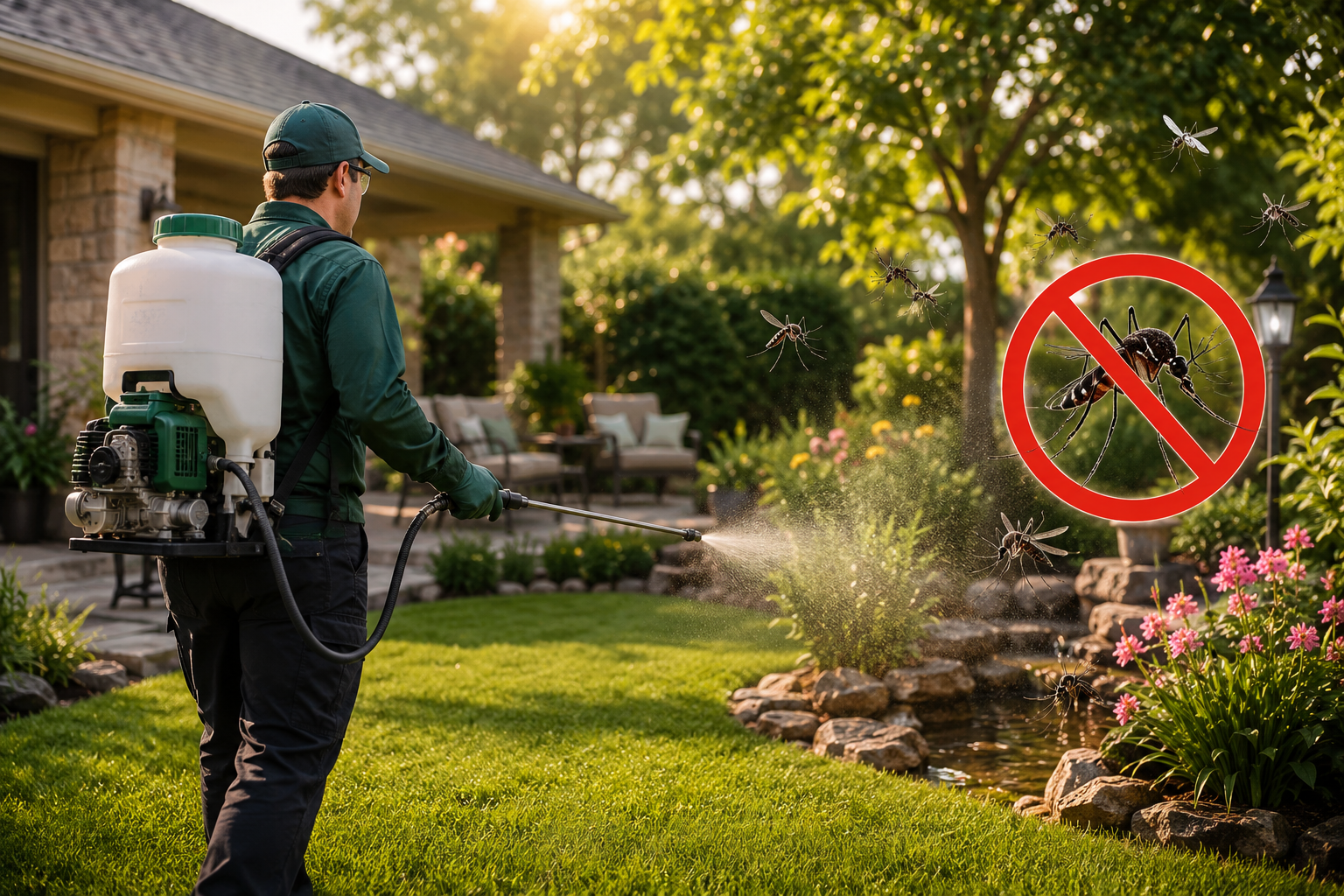
At Backyard Comfort & Pest Control, monthly mosquito yard treatments are the standard during peak season (April through October) for Bryan–College Station homeowners. Each treatment covers the perimeter shrubs, lower tree canopy, fence lines, and any dense vegetation where mosquitoes shelter. Results are typically noticeable within 24 hours and last through the next scheduled visit.
Step 4: Consider a Mosquito Misting System for Long-Term Control
If your property has consistent, heavy mosquito presence — especially if you’re near a creek, pond, wooded area, or drainage easement — a permanent automated misting system is worth serious consideration.
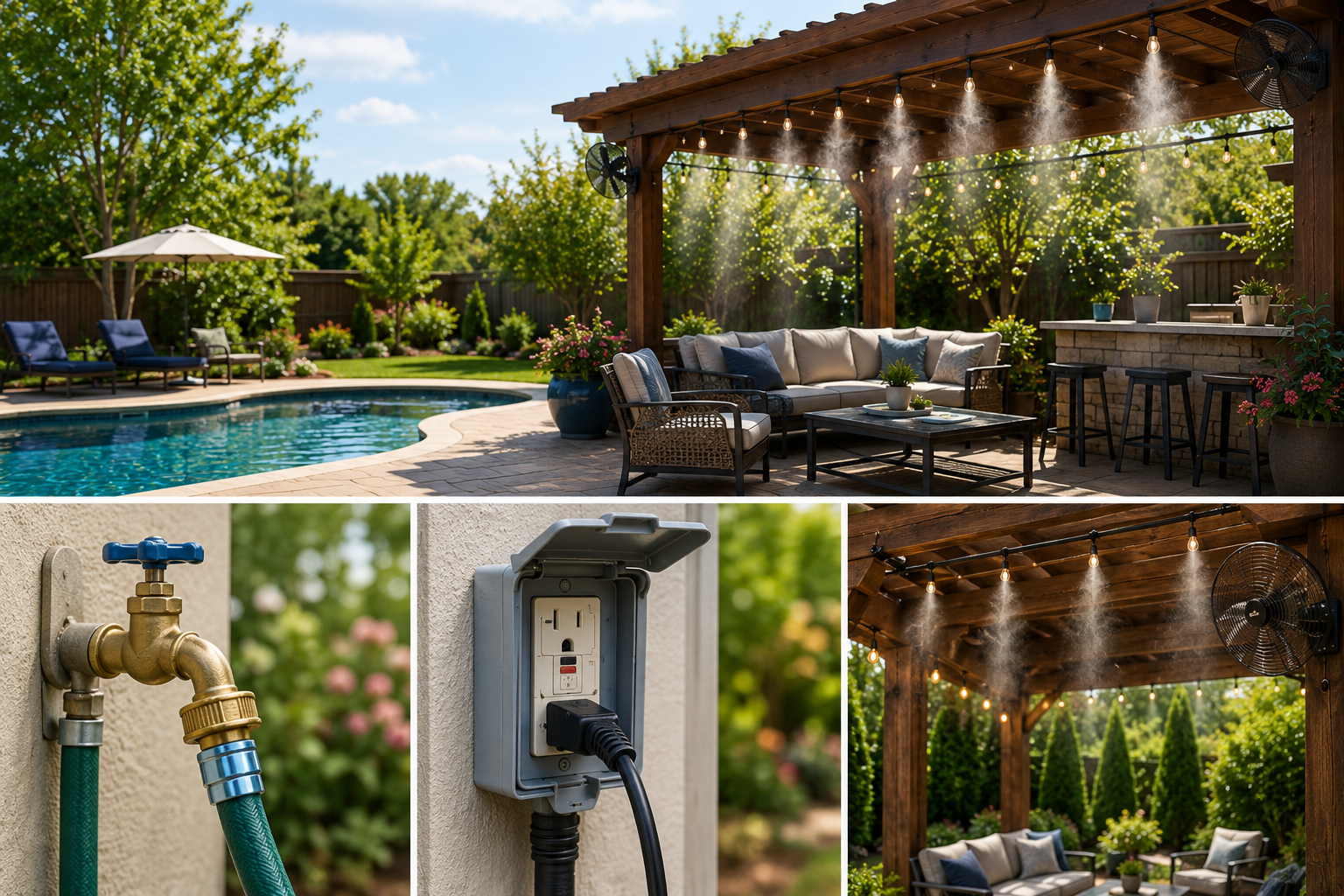
These systems use a network of nozzles installed along fences, in landscaping beds, or under eaves, and they release fine mist treatments on a timer throughout the day.
Automated misting systems are especially popular with families who use their backyards regularly, homeowners with pools, and anyone who hosts outdoor gatherings.
Step 5: Time Your Outdoor Activity and Use Personal Repellents
Even with professional treatment in place, a few personal habits go a long way. Mosquitoes in Texas are most active at dawn and dusk when temperatures drop and humidity rises.
Avoiding outdoor time during those windows — or at least covering up and applying an EPA-registered repellent like DEET or picaridin — reduces your exposure significantly between spray visits.
Fans also help more than most people realize. Mosquitoes are weak fliers. A box fan or outdoor ceiling fan directed across your seating area creates enough air movement to make landing extremely difficult.
Why DIY Solutions Fall Short in College Station
Citronella candles and tiki torches repel mosquitoes in a very small radius under ideal conditions. Clip-on repellent devices work for the person wearing them, not for the yard.
Bug zappers attract and kill insects, but mosquitoes are not strongly attracted to UV light — you’ll kill moths and beetles before you make a dent in the mosquito population.
The Texas heat accelerates how fast any residual product breaks down, which is why consistent, scheduled professional service outperforms any one-time or DIY approach.
A licensed technician knows where product needs to be applied, which formulations hold up in this climate, and how to adjust treatments based on what’s actually happening on your property each month.
Stop Mosquitoes Before They Ruin Your Summer
Call Backyard Comfort & Pest Control at
(979) 324-3223
or visit
backyardcomfortandpestcontrol.com
to schedule your yard treatment today. Serving Bryan, College Station, and the entire Brazos Valley.